A History of the World in 6 Glasses Reading Questions
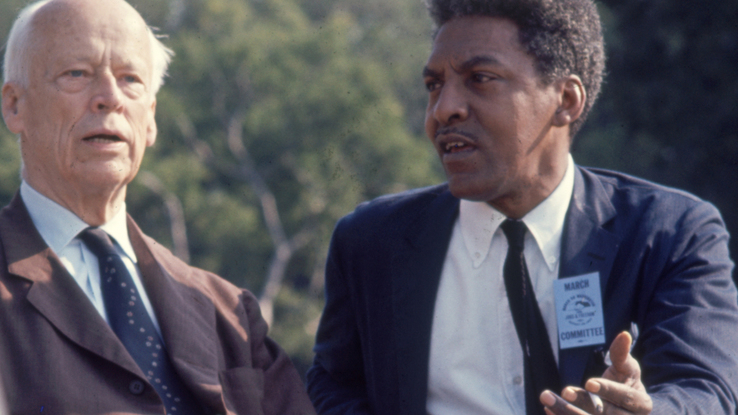
While Malcolm 10, Rosa Parks and of grade Martin Luther King Jr. are all well-known leaders in America'southward ceremonious rights move, the accomplishments of that era were the piece of work of more than just a few individuals. Thousands marched, organized, educated and more than to build a ameliorate society, and as a upshot, some leaders fell past the wayside of many of today's history books. These are just some of the amazing civil rights leaders y'all may have never learned about.
Claudette Colvin
Although Rosa Parks may be famous for refusing to give up her seat for a white man, Claudette Colvin stood her footing nine months earlier — and at the age of 15 rather than 42. She and 3 of her friends were sitting in a row when a white woman boarded the bus, and the driver demanded that all four of them motility. Three did. Claudette didn't.
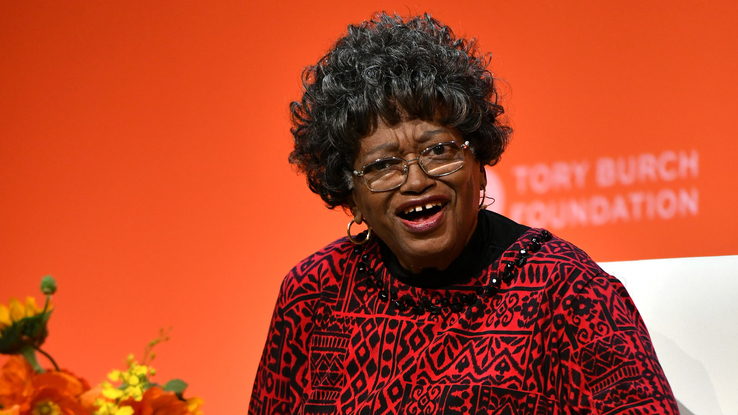
She explained that it was her constitutional right to sit there. "It felt," Colvin after explained, "as though Harriet Tubman'south hands were pushing me down on one shoulder and Sojourner Truth's hands were pushing me downwards on the other shoulder."
Colvin's books were knocked from her hands, and she was manhandled off the coach and later placed in jail before being bailed out by her parents. The National Association for the Advancement of Coloured People (NAACP) considered promoting her as a central effigy in the fight confronting segregation, merely it ultimately chose not to because she was a teenager. She also soon became pregnant, which organizers feared would distract from the broader struggle.
Even so, along with Aurelia S. Browder, Susie McDonald and Mary Louise Smith, Colvin became one of iv plaintiffs in the example of Browder vs. Gayle, which saw Montgomery, Alabama'due south bus policies thrown out as unconstitutional. Colvin moved to New York City two years later and became a nurse'south aide.
While Martin Luther King Jr. was the confront of the civil rights rallies of the '60s, Bayard Rustin was the man behind the scenes who organized them. Raised by his teenage female parent and Quaker grandparents, he was drawn to the Young Communists League while attending New York's Metropolis Higher during the 1930 considering of their support for racial equality. However, he left when the Communist Political party shifted away from civil rights work after 1941. He then joined the Fellowship of Reconciliation (FOR), co-founded the Congress of Racial Equality (CORE) and became an agile campaigner for ceremonious rights.
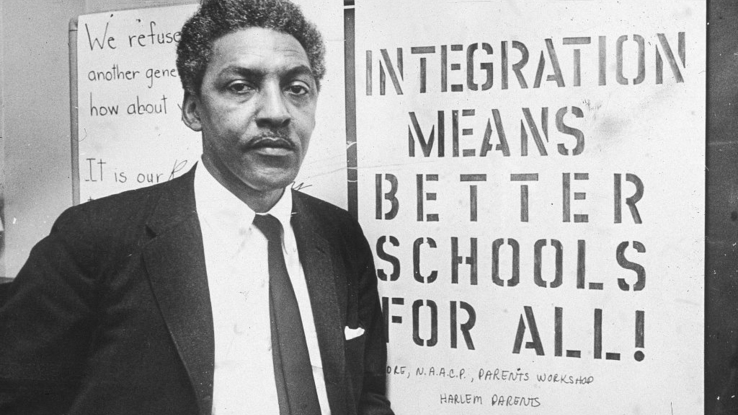
Rustin's accomplishments are most too numerous to list. He participated in Core'due south Journeying of Reconciliation, the predecessor to the later Freedom Rides that ended bussing segregation, and ended up on a chain gang as a result. He used that feel to publish several newspaper articles that led to the reform of such gangs. In 1948, he went to Bharat to run across Mahatma Gandhi'south nonviolent practices in activeness, and he later traveled to West Africa to work with dissimilar colonial independence movements. He became a close counselor to Martin Luther Rex and played an instrumental role in everything from 1963's March on Washington for Jobs and Freedom to helping to draft King's Memoir, Stride Toward Freedom.
Rustin became a target of J. Edgar Hoover and the FBI early on because of his communist ties, and his 1953 confidence on charges of homosexual action caused tension even with other civil rights leaders. Nonetheless, Rustin continued his work, and in the 1980s, he finally opened upward most his sexuality. He played a central function in getting the NAACP to take action against the AIDS crisis. He died in 1987.
Shirley Chisholm
Born to immigrant parents from British Guiana and Barbados, Shirley Chisholm graduated from Brooklyn College in 1946. She was an education consultant for New York City's daycare organisation and was active in the NAACP before representing Brooklyn in the New York's state legislature from 1964 to 1968. She so achieved success on the national stage by winning election to the Firm of Representatives, where she remained until 1981. She was an ardent opponent of the Vietnam State of war and a supporter of abortion rights and the Equal Rights Amendment.
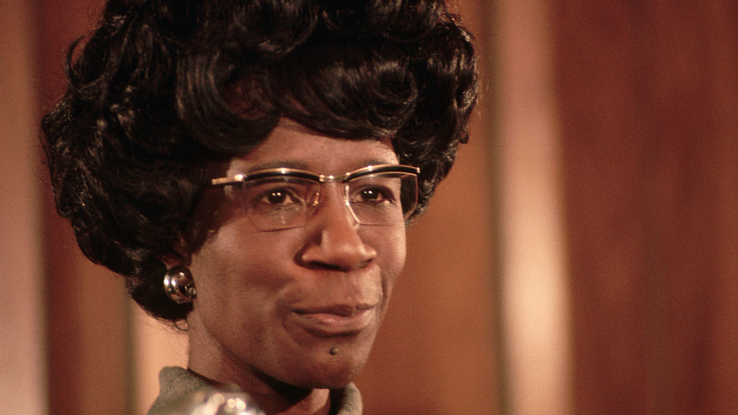
Chisholm was as well both the kickoff Black person and first woman to run for the nomination of a major political party in the United States. Though she only received 152 consul votes at the 1972 Democratic National Convention, her run nevertheless foreshadowed even greater political accomplishments for women and people of color in the years and decades to come.
Benjamin Mays
Martin Luther Rex Jr. in one case described Benjamin Mays as his "spiritual mentor." Built-in in 1894 Hezekiah and Louvenia Carter, who were old slaves, Mays grew upward to get a doctorate from the University of Chicago and was ordained equally a Baptist minister. He later became president of Morehouse College.
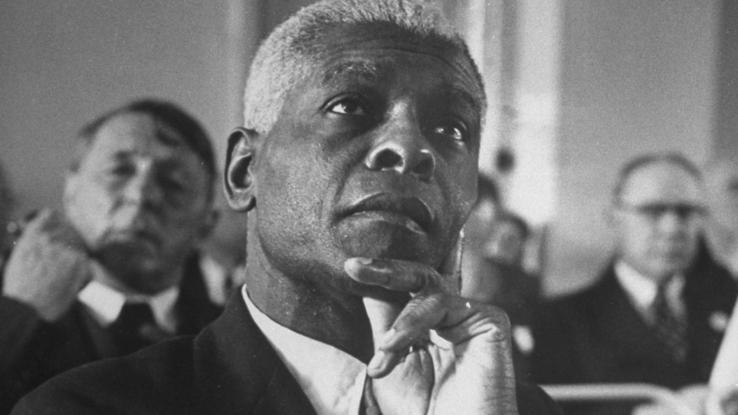
While at Morehouse, Mays delivered weekly addresses at the higher'due south chapel, and it was these speeches that start drew a young Martin Luther King Jr. to him. Male monarch began coming together with Mays to discuss theology and globe diplomacy later the weekly addresses, and Mays began to accept Sunday dinners with the Male monarch family.
Mays went on to exist 1 of King'due south nearly prominent supporters. When mass arrests led Male monarch's father to ask him to footstep down equally a leader in the Montgomery jitney boycott, Mays vocally supported King's decision not to practise and then. He gave the benediction at the March on Washington for Jobs and Freedom in 1963. Fifty-fifty after King's bump-off, Mays continued to fight for civil rights and became the first Black president of the Atlanta Board of Education.
Nannie Helen Burroughs
Like Mays, Nannie Helen Burroughs' parents had experienced the horrors of slavery firsthand. After her begetter died, she and her mother moved to Washington D.C. Burroughs performed well in school, just despite her success, she was unable to find a job as a public schoolhouse teacher. As a issue, she decided to establish her own school for Blackness American women without the ways to pay for an education.
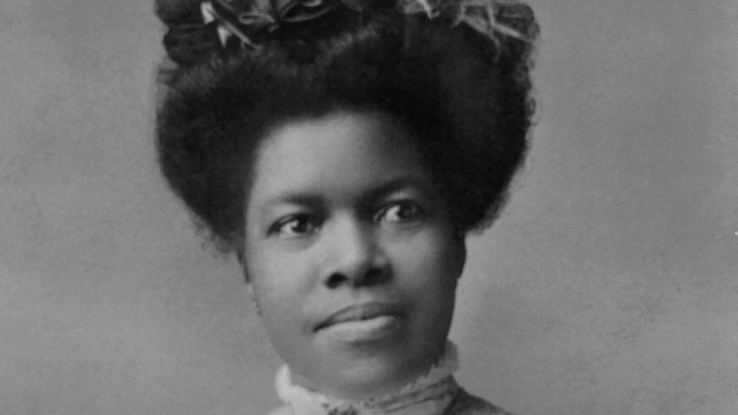
Some civil rights leaders of the time, such as Booker T. Washington, doubted Burroughs' ability to heighten money for the school. Because of donations from local black women and their families, nonetheless, Burroughs was even so successful, and the National Trade and Professional School for Women and Girls (NTPSG) in 1909 with the motto, "We specialize in the wholly incommunicable." At age 26, Burroughs was the first president.
The NTPSG was unusual in that it combined a classical education forth with vocational skills meant to assist black women detect jobs in mod society. Black history was also a required course, a largely unprecedented move for the fourth dimension. While the original school only consisted of a small-scale farmhouse, in 1928, it grew to include a larger building with 12 classrooms and boosted facilities. Burroughs died in 1961, but her efforts to provide education and opportunity regardless of race or gender paved the fashion for further efforts to secure civil rights.
gustavsonsigne1962.blogspot.com
Source: https://www.reference.com/history/influential-civil-rights-leaders-fba3aa8663d7f466?utm_content=params%3Ao%3D740005%26ad%3DdirN%26qo%3DserpIndex
0 Response to "A History of the World in 6 Glasses Reading Questions"
Post a Comment